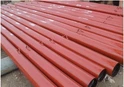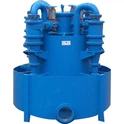

The manufacture and fabrication of steel jacketed insulation pipe needs to correspond to specific applications and structures. Usually, foamed styrene is injected directly into the insulation between the inner and outer pipes to form a primary foam. Appropriate tooling is applied to both the inner and outer pipes to maintain good concentricity prior to slurry injection. The lower sealing treatment must be tight to prevent leakage. Due to the slow development and rational application of insulating pipe materials, different types of insulating pipes have emerged. Among them, polyurethane insulated pipe is common in the sales market nowadays and is loved by many people. Generally speaking, the sales market is very wide. However, polyurethane insulated pipes will respond differently in different piping surfaces in the application. Polyurethane insulated pipes are used for good insulation technology and materials for construction and industrial production, which can be achieved with twice as much effort. Statistical analysis shows that 1 ton of mineral wool insulation can save 1 ton of oil. Many energy-saving residential sites indicate that the coal saving rate per unit area is an average of 11.91kg of standard coal per year. Good insulation countermeasures and materials greatly reduce production energy consumption and costs, improve the environment, and can have good economic benefits. In industrial equipment and piping works, the heat loss can be reduced by 95 percent under good insulation conditions. The investment on insulation material can save about 1 year of energy to recover.
When the internal pipe and external insulation of the steel jacketed insulation pipe, the foam styrene is usually injected directly between the two pipes to form the form at once. Before injecting the slurry insulation, proper tools must be used to maintain good concentricity between the inner and outer pipes. The lower sealing treatment must be tight to prevent leakage. Short lengths of insulation can be injected vertically depending on the flow state of the slurry and the foam rate, but most insulation is injected at an angle to promote slurry flow and foam. Depending on the equation and structural requirements, it can be injected from the top or bottom. In the case of longer pipes, a sliding bar of the mixing head is introduced into the lower part of the pipe gap through the pipe and the pipe can be gradually pulled out as the injection volume increases. This method is only applicable to the manufacture of common shell insulation up to 3 mm.